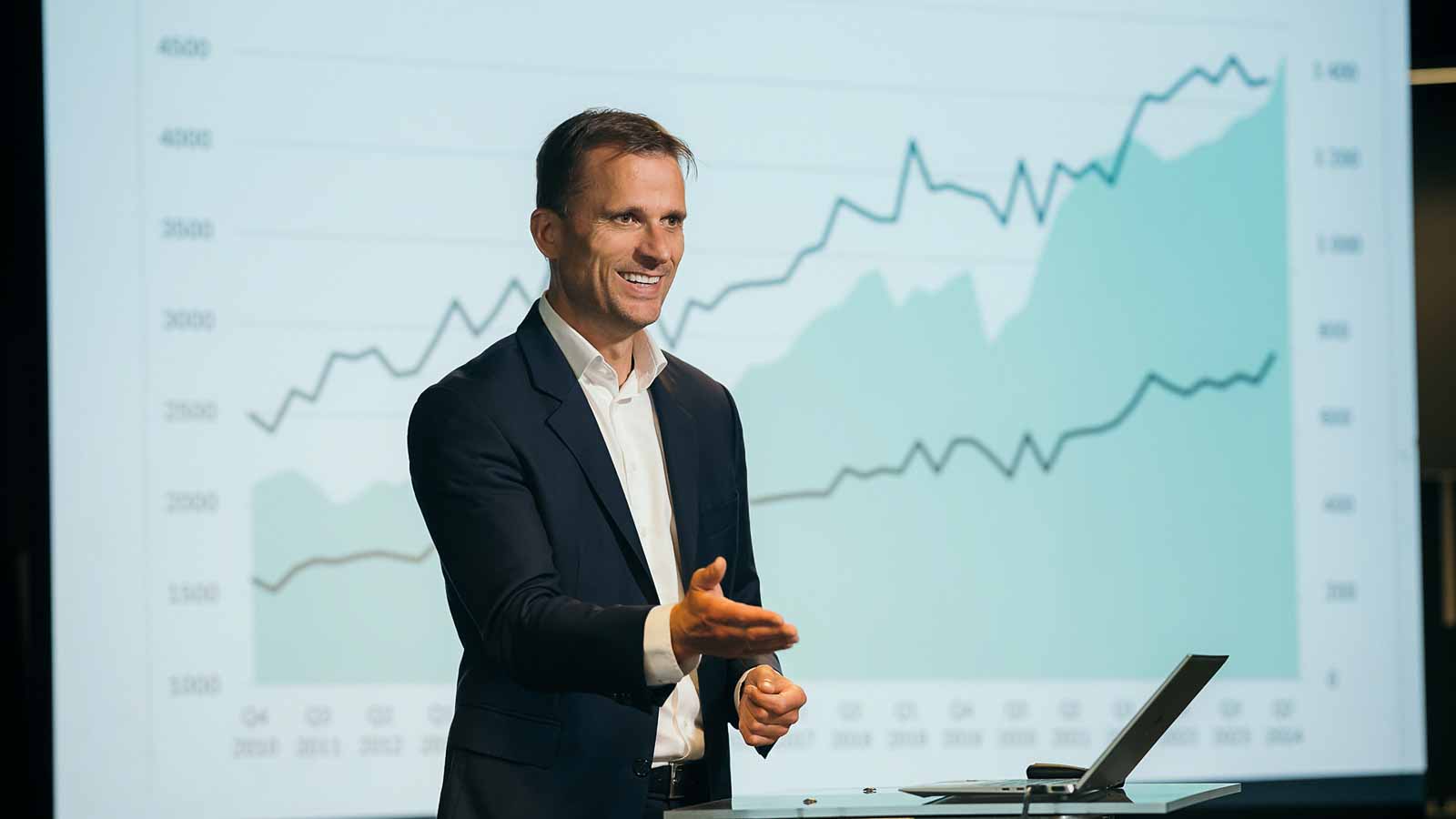
Proptech stands for "Property Technology", which is eiendomsteknologi in Norwegian – the new technology that has entered our buildings
2019 – The big proptech year
For many people working with commercial buildings, 2019 has been the "proptech" year in Norway. Proptech stands for "Property Technology" and is the new technology that has entered our buildings. We have seen many exciting products and services that have started to transform our buildings from being a product – a piece of building – into being a service. This is something several of the major property landlords are actually promoting.
What has been particularly exciting in 2019 is that the conversation has shifted from talking about proptech to actually taking action. A growing number of building owners now have an enormous amount of sensor technology in their buildings – but how are we going to use it?
Having data in our buildings is actually something we have had over the past decades since BMS systems made their entry into the construction industry. We also have a lot of other technology in our buildings with a great deal of valuable data, such as access systems, lifts, ventilation systems, etc. The challenge is that this is data in proprietary form, or in a so-called "open" language that only one industry speaks. An example of this is BACnet (Building Automation and Control (BAC) networks), which has become an industry standard in building automation. But why is sensor data from these systems not shared?
In brief, challenges with BACnet
BACnet was developed in 1987 and has neither encryption nor security. Anyone on the network can ask "Who is" and will get the answer "I am". It was not designed to pass through a router. If it does, it must support something called BBMD (BACnet Broadcast Management Device). I won't go into further technical detail, but this means that a protocol created before the age of the internet, lacking security and without a sensible data packet structure, is the protocol on which all sensors in building automation have standardised.
Furthermore, no other industries speak BACnet apart from HVAC. Even though it has an "open" standard, it is permitted to create proprietary blocks within BACnet. This means that even if you know the language, you cannot access the data.
The sensors
When you look at the limitations that exist in buildings today, it is no surprise that building owners have been on the barricades in the "proptech wave", which also champions openness and sharing. Take for example Proptech Innovation, a cluster with roots in Bergen, where building owners require openness and sharing of data via API.
The new companies
Looking at companies that have tried to create services for users in the building, it has been a tough road. Having a cool and stylish app is no use if the app cannot communicate using these outdated protocols. Most cannot.
After all, why would companies without legacy and technical debt build systems on these protocols when APIs and MQTT have been the common denominator for IoT? What has happened is that we have had to supplement buildings with new, open technology – but what does this mean for the way forward?
Insight
The word "insight" has gained great value. We have seen that having insight to make data-driven decisions has been important. Being able to analyse meeting rooms, having control over indoor air quality, monitoring deliveries and knowing how users are doing has been important. But just as with other infrastructure in a building, I believe we have only seen the tip of the iceberg in terms of how we can use the data that sensor technology provides us.
If you start to look at who is in the building today, there are many different professional groups with a connection to a building, in one way or another.
Facility management
It is well known that FM (Facility management) is characterised by routines and man-hours with little use of technology so far. If you imagine that a cleaner or canteen operator uses presence data, this alone could be a major saving while also delivering better value for users. You could then prioritise high-traffic areas more effectively and actually prepare food for the people who are in the building. When the largest tenant invites to larger gatherings, the right amount of food is therefore prepared.
Technical management and operations
To maintain the building, there are two important roles. Having responsibility for technical management is an incredibly important role. Making poor decisions can cost many millions and is often irreversible. In addition, operations management is typically included in this role – namely deciding how often technical systems should be inspected.
With good data you can make data-driven decisions, and when making a "costly" decision you also want as much accuracy as possible. This means getting as much data as possible about what you want to achieve, or what the problem is. If you also look at operations services, they are based on many routine-oriented tasks. There is a lot to save here by using technology, both in reduced cost and increased value.
I have worked a great deal on this in 2019, and below you can read how we did this with the Toma Group.
https://nemitek.no/airthings-arne-rud-energy-control/drifter-etter-behovene/105102
Service trades
Your building has several technical systems that today require service according to a calendar. Cycles are often every six or twelve months. But what do you do on service visits? Well, worn parts and filters are replaced, but a large part of service operations is actually checking a delivered service. This is where sensor technology is really going to disrupt the industry.
The word "disruptive" implies a radical change that often means several companies cannot turn around fast enough. My biggest piece of advice is always to imagine how you can adapt your industry to the various trends we are seeing.
Your city
We often talk a lot about "the smart city", but in my view a smart city consists of smart buildings. Imagine if buildings could report their own waste management challenges. Buildings could compare themselves against other buildings, have containers automatically emptied and receive key figures that motivate us – in the same way that we want to walk a certain number of steps a day – to increase focus on sorting rates.
Or what about the power load on our electricity grid? We know we already have a capacity challenge right now. What if buildings could talk to each other and prepare the "power grid" for the fact that a large load from building X is coming soon, and then ask building Z and Y to reduce their load?
The users and tenants
Last but perhaps most important: everyone who uses the building daily. We have long seen stylish videos showing us that the coffee machine starts when you walk through the door. Rema 1000 commercials have shown us fun twists on this, but it is absolutely clear that we want technology to make our daily lives better.
Can sensor data become just as important and relevant as having Wi-Fi in your building? I believe so, but it requires a great deal from us as an industry to succeed with it!